

0.00€
CheckoutThe role of terpenes in the aroma and taste of cannabis
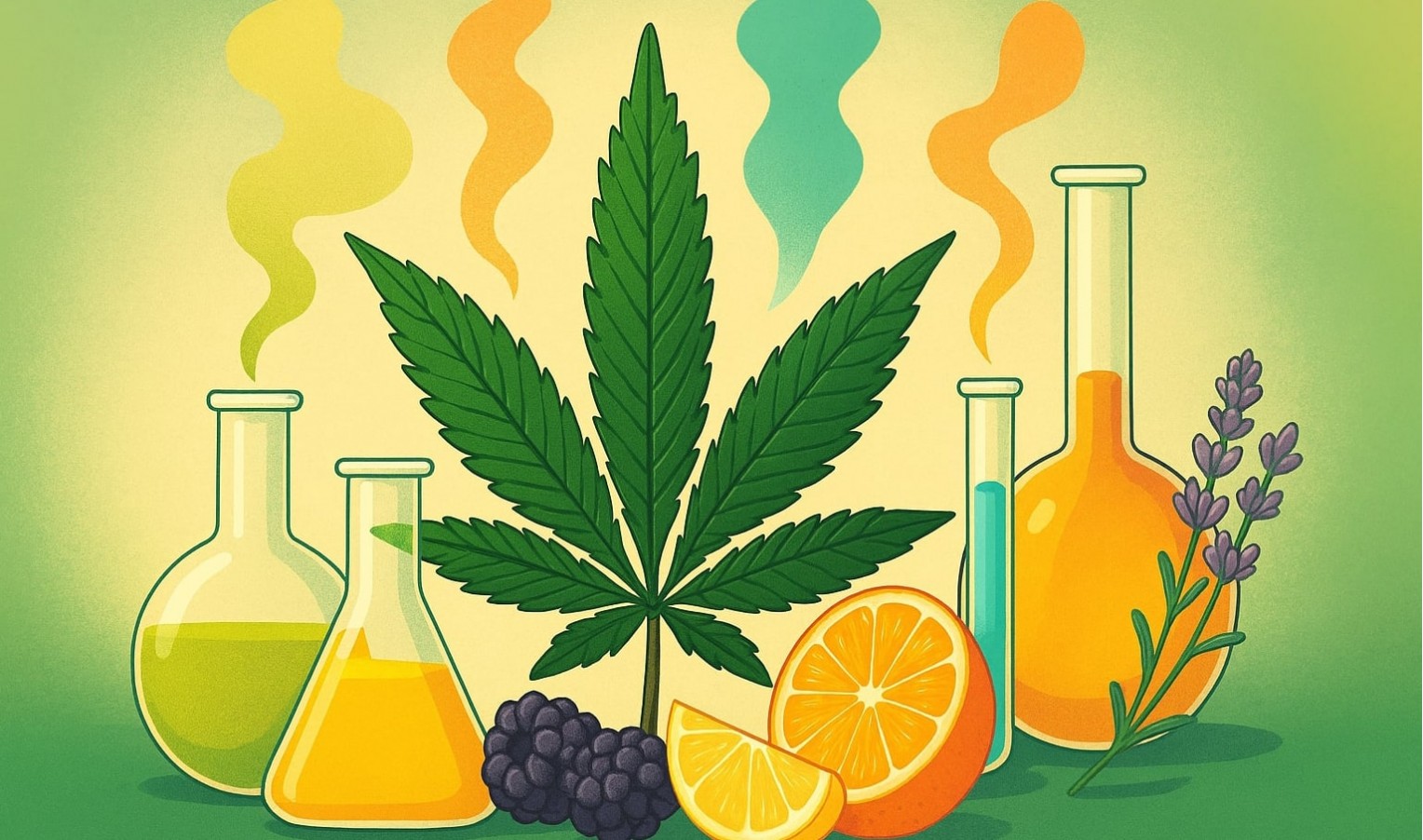
What are terpenes and their importance in cannabis
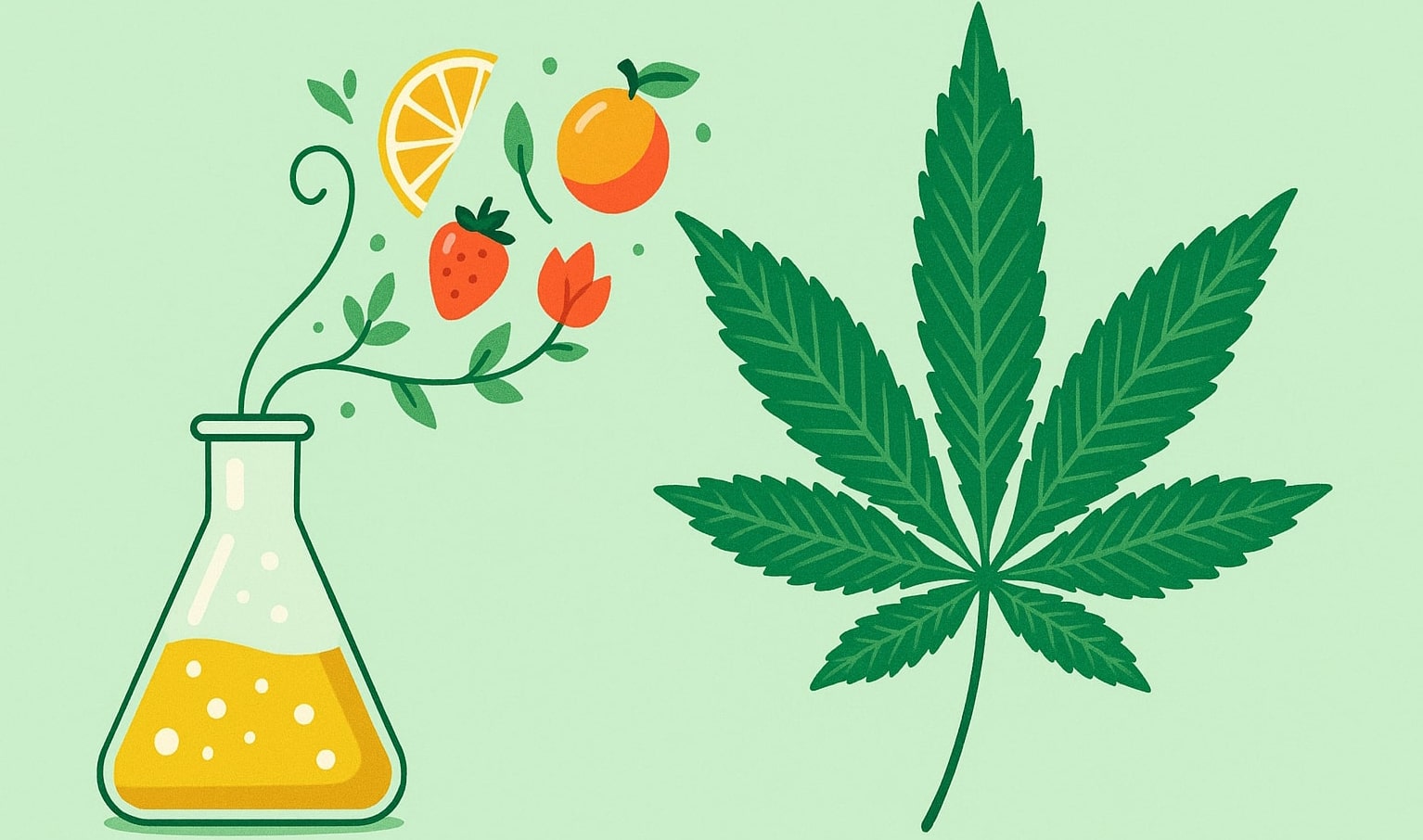
Terpenes are natural aromatic compounds found in cannabis that give it its unique smell and taste. Essentially, they are essential oils found in citrus fruits, coniferous trees, and flowers. They are responsible for the fact that one strain smells like fresh pine, another like sweet fruit, and a third like spicy herbs.
When we talk about terpenes in cannabis, it is important to understand that they not only create the aroma and taste of cannabis, but also influence its interaction with cannabinoids. Terpenes and cannabinoids work together to create a unique effect: some combinations enhance relaxation, while others stimulate concentration.
Interestingly, it is the terpene profile that helps explain the question: Why do some strains have 30%+ THC, while others do not? It is not only about the percentage of cannabinoids, but also about how the influence of terpenes enhances or softens the effect. Terpenes act as conduits, unlocking the potential of THC and other compounds, making the effect more intense or, conversely, milder.
Thus, understanding what terpenes are is the key to realizing why different cannabis strains feel completely different, even if their THC levels are similar.
Types of terpenes and their effect on aroma and taste
Each cannabis strain has its own terpene profile, which determines its individual aroma and taste. These compounds work in conjunction with cannabinoids to create a unique effect. The question “Which genes are responsible for THC levels and aroma?” remains key to breeding: it is genetics that determine which types of terpenes will predominate in a particular plant.
The main terpene compounds are:
Myrcene
- Earthy and musky undertones.
- Often associated with a relaxing effect.
- Enhances the perception of cannabinoids, making the effect more profound.
Limonene
- Citrusy, fresh aroma.
- Creates an invigorating mood and lightness.
- Influences how terpenes affect aroma, adding brightness and freshness.
Pinene
- A piney, fresh scent.
- Promotes concentration and clarity of thought.
- When combined with cannabinoids, it can soften the sedative effect.
Linalool
- A floral aroma reminiscent of lavender.
- Has a calming effect.
- Influences the balance between the aroma and the overall sensation of the strain.
Final value
- Terpenes and cannabinoids work together to create the unique effect of cannabis.
- Flavonoids and terpenes complement each other, creating a rich palette of flavors.
- Natural aromatic compounds make each strain unique, and genetics determine which terpene profiles will dominate.
Thus, understanding terpenes helps explain not only the variety of flavors and aromas, but also why different strains feel different, even with similar THC levels.
Terpene profile and the complex effect of cannabis
The terpene profile is a unique combination of natural aromatic compounds that shapes the character of each strain. It determines not only the aroma and taste of cannabis, but also how the plant will interact with cannabinoids. That is why the question “What fertilizers does marijuana need at different stages of growth?” is directly related to the formation of the terpene profile: nutrition and growing conditions affect the concentration and balance of terpenes.
The effect of terpenes on the effect:
- Terpenes in cannabis enhance or soften the effects of THC and other cannabinoids.
- Hemp essential oils create a rich aroma that makes each variety unique.
- Natural aromatic compounds, together with flavonoids, form a rich palette of flavors and smells.
The relationship between growth stages and terpene profile
| Plant growth stage | Effect on terpene profile | What fertilizers does marijuana need at different stages of growth? |
| Vegetation | The basic aromatic background is formed, the future taste is laid down. | Nitrogen fertilizers for active growth of leaves and stems |
| Pre-flowering | Synthesis of key terpenes (myrcene, pinene) begins | Complex fertilizers with potassium and phosphorus |
| Flowering | Maximum accumulation of terpenes and cannabinoids | Phosphorus and potassium fertilizers to enhance resin and aroma |
| Final stage | The formation of a unique terpene profile is nearing completion. | Organic additives to preserve pure taste and aroma |
Thus, proper plant nutrition directly affects its terpene profile, and therefore the final aroma and taste of cannabis and hemp varieties.
This text is for informational purposes only and does not contain instructions for cultivation. Any actions involving plants of the Cannabis genus must comply with the laws of your country/region.
2025-12-16 17:13:27
Views:221