

0.00€
CheckoutFabric pots vs plastic pots
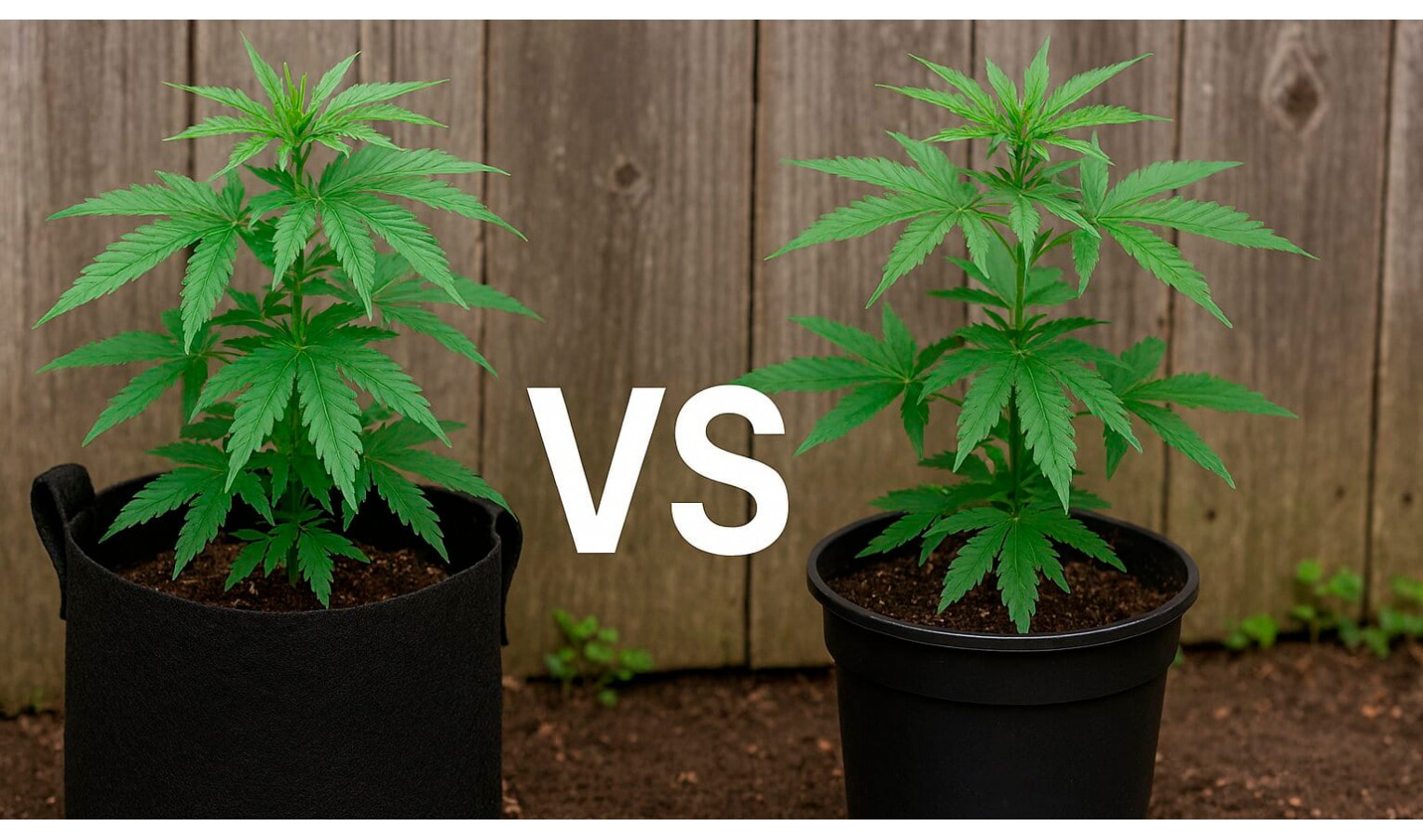
Choosing between fabric and plastic pots for cannabis is not just a matter of convenience, but a strategic decision that affects root health and final yield. Modern methods of growing marijuana in pots require consideration of aeration, drainage, and the environmental friendliness of materials, as these factors determine the quality of the future harvest.
Fabric pots for cannabis: unique advantages
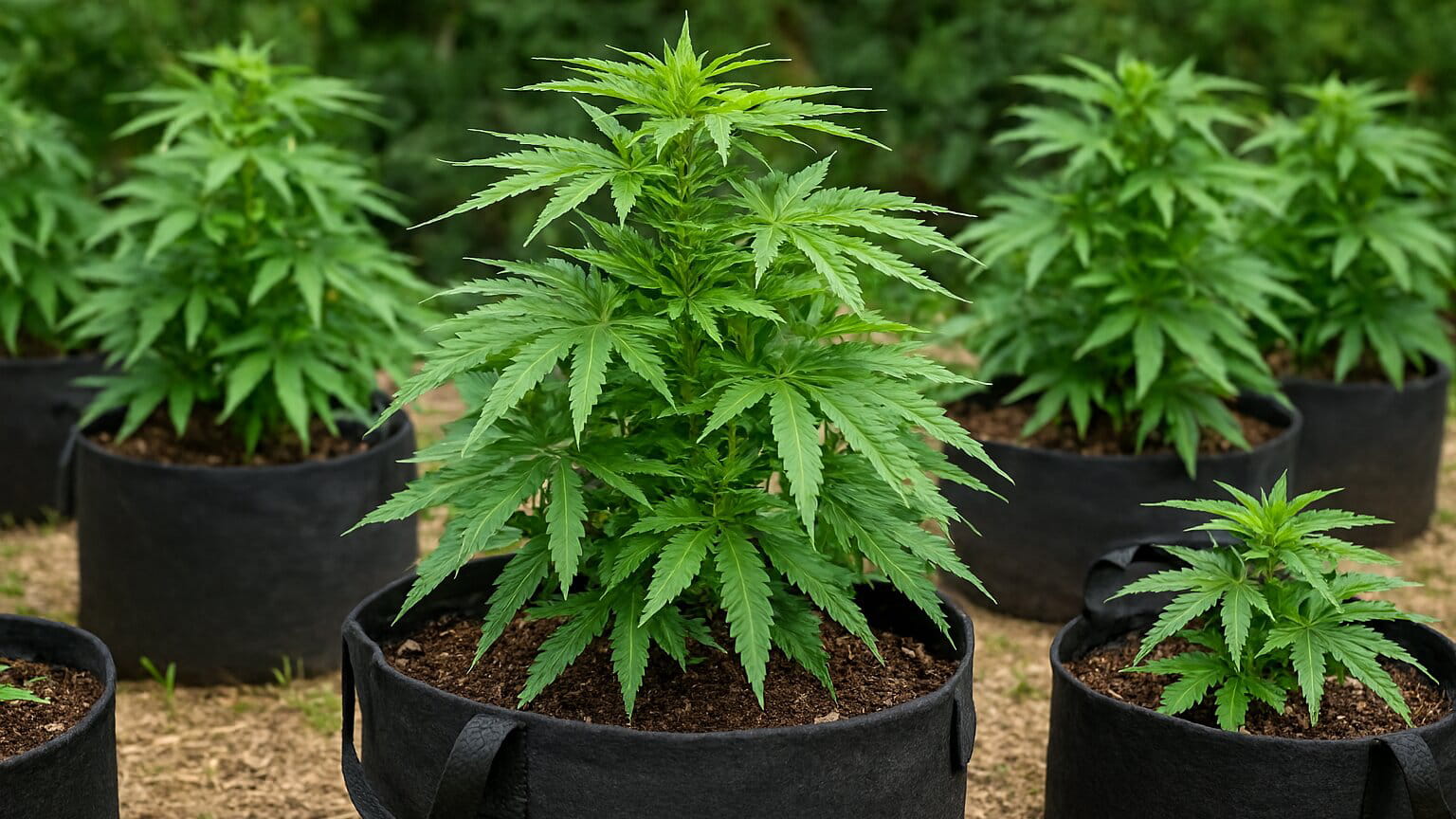
Fabric pots for cannabis are a modern solution that helps grow healthier and more resilient plants. Their main feature is that they provide constant aeration of cannabis roots, preventing moisture stagnation and the development of rot. This promotes the formation of a healthy cannabis root system, which directly affects the growth and yield of cannabis.
Unlike plastic models, fabric pots allow the soil to “breathe,” which means that the beneficial microbiota of the cannabis soil develops more actively. This environment promotes better nutrient absorption and increases plant resistance to disease.
It is important to note that it is under conditions of proper aeration and moisture balance within the plant that complex biochemical processes are triggered. This is how cannabinoids are formed inside the plant, which determine the quality and strength of the future harvest.
In addition, fabric pots can be classified as eco-friendly cannabis pots: they are often made from recycled materials and last longer than they appear at first glance. For indoor cannabis pots, they provide a stable microclimate, and for outdoor cannabis pots, they provide resistance to temperature and moisture fluctuations.
Plastic pots for cannabis: practicality and limitations
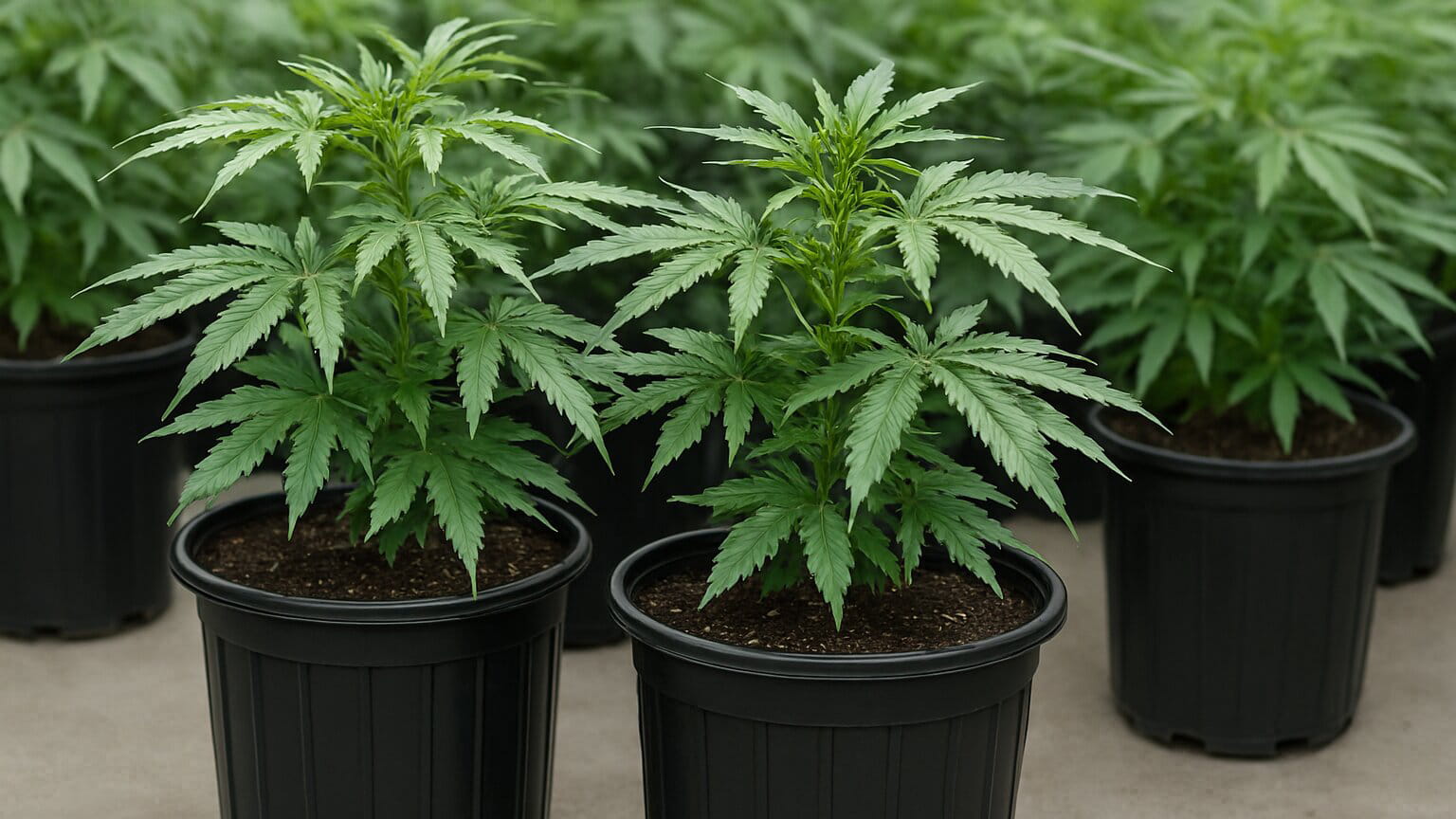
Plastic pots for cannabis remain the most affordable option for those who are starting to grow marijuana in pots. Their popularity is due to their ease of use and low cost. However, this material has both advantages and disadvantages that are worth considering.
The main advantages of plastic pots:
- Variety of sizes — it is easy to find the optimal pot sizes for marijuana at different stages of growth.
- Strength and durability — plastic is resistant to mechanical damage and external conditions.
- Moisture retention — the soil stays moist longer, which can be useful in hot climates.
Disadvantages of plastic pots:
- Poor aeration of cannabis roots — limited air access can lead to soil compaction.
- Risk of overwatering — poor drainage reduces the activity of beneficial cannabis soil microbiota.
- Lower plant resistance to disease — moisture stagnation increases the likelihood of root infections.
Interestingly, many beginners ask themselves: how do you grow odorless cannabis? This is more difficult in plastic pots, as limited aeration and poor drainage can intensify odors if not cared for properly. Therefore, to control the aroma and health of plants, it is often recommended to use fabric models or combine plastic pots with additional ventilation systems.
How to choose the best pots for cannabis: comparing materials
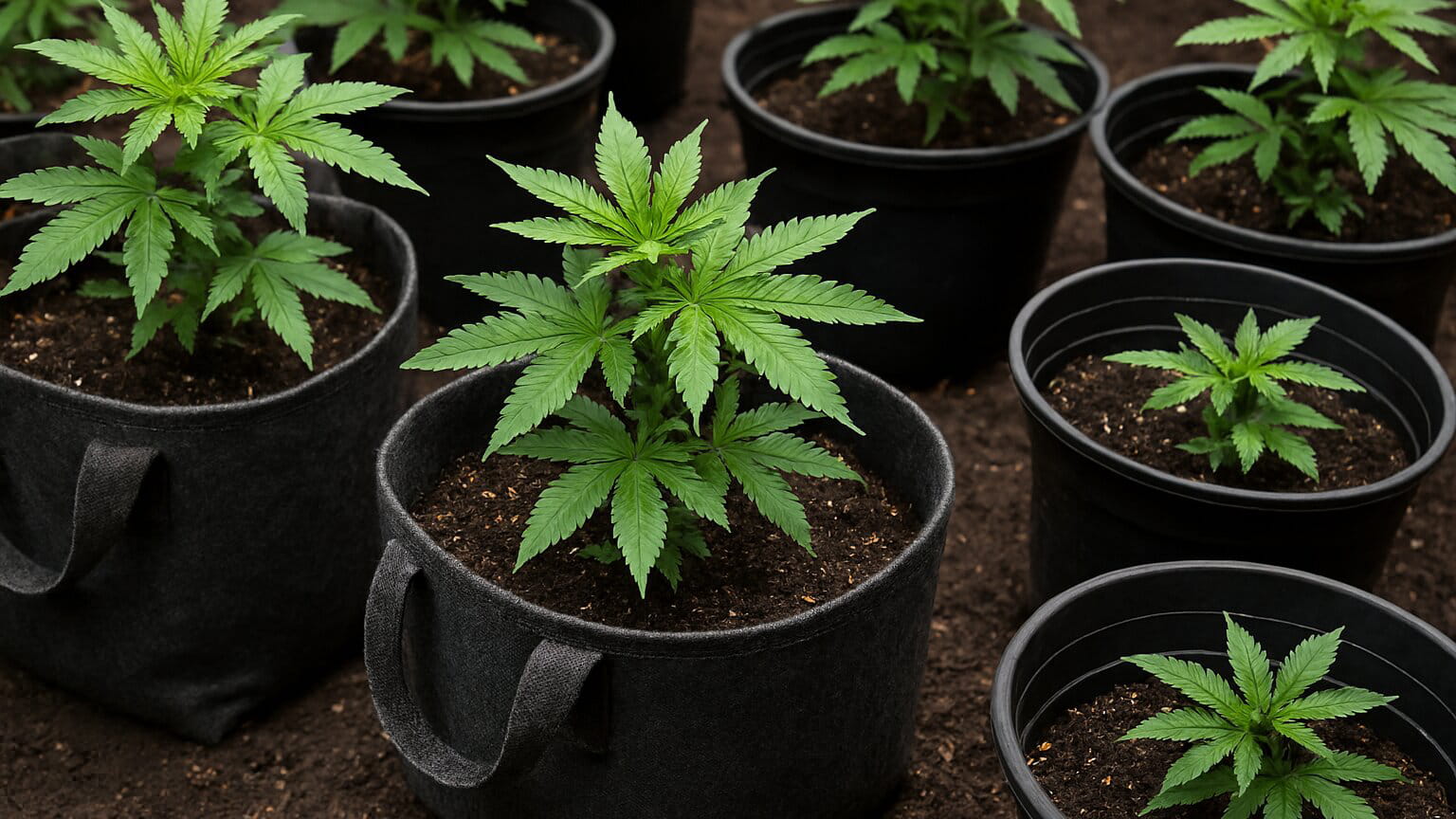
The choice between fabric and plastic models directly affects plant health, their stability, and the final yield of cannabis. It is important to consider not only the material, but also the growing conditions—whether it is pots for indoor cannabis or pots for outdoor cannabis.
| Criterion | Fabric pots for cannabis | Plastic pots for cannabis |
| Aeration of cannabis roots | Excellent, prevents rotting | Limited, risk of soil compaction |
| Drainage and moisture permeability | High, water does not stagnate | Average, excess moisture possible |
| Healthy root system | Forms actively, roots develop evenly | Problems may arise in case of over-watering. |
| Cannabis soil microbiota | Develops better, the soil “breathes” | The activity of beneficial microorganisms is decreasing. |
| Plant resistance to diseases | High thanks to aeration | Moderate, with poor care, risk of infections |
| Environmental friendliness | Eco-friendly cannabis pots, often made from recycled materials | Less environmentally friendly, plastic is difficult to recycle |
| Marijuana pot sizes | Various options are available, but the fabric may become deformed. | Wide selection, stable shape |
| The best materials for pots | Fabric — for health and the environment | Plastic — for strength and affordability |
Therefore, if root health and environmental friendliness are priorities, fabric models are the optimal choice. If durability and ease of care are important, plastic pots remain a practical option.
Another important point: many beginners wonder what fertilizers marijuana needs at different stages of growth. The answer is directly related to the type of pot. In fabric models, fertilizers are absorbed faster thanks to active aeration and the work of microbiota, while in plastic models, they are absorbed more slowly, which requires more careful control of dosages and watering regimes.
This text is for informational purposes only and does not contain instructions for cultivation. Any actions involving plants of the Cannabis genus must comply with the laws of your country/region.
2026-03-05 17:38:52
Views:74