

0.00€
CheckoutThe effect of soil pH on nutrient uptake
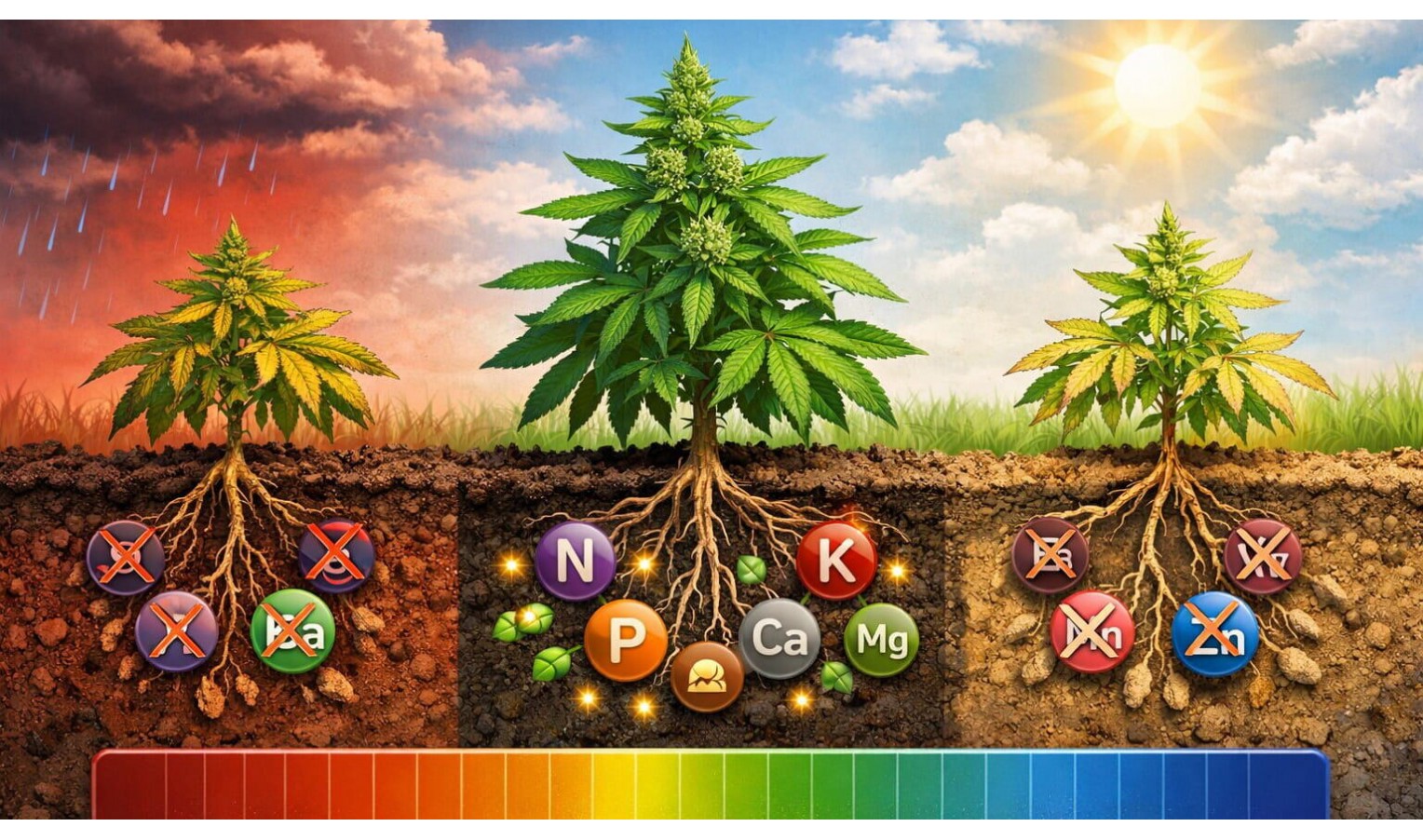
Soil acidity is one of the key factors determining the health and productivity of cannabis. The correct pH of cannabis soil ensures stable nutrient uptake and prevents blockages that can lead to deficiencies and reduced yields.
The importance of soil pH for cannabis
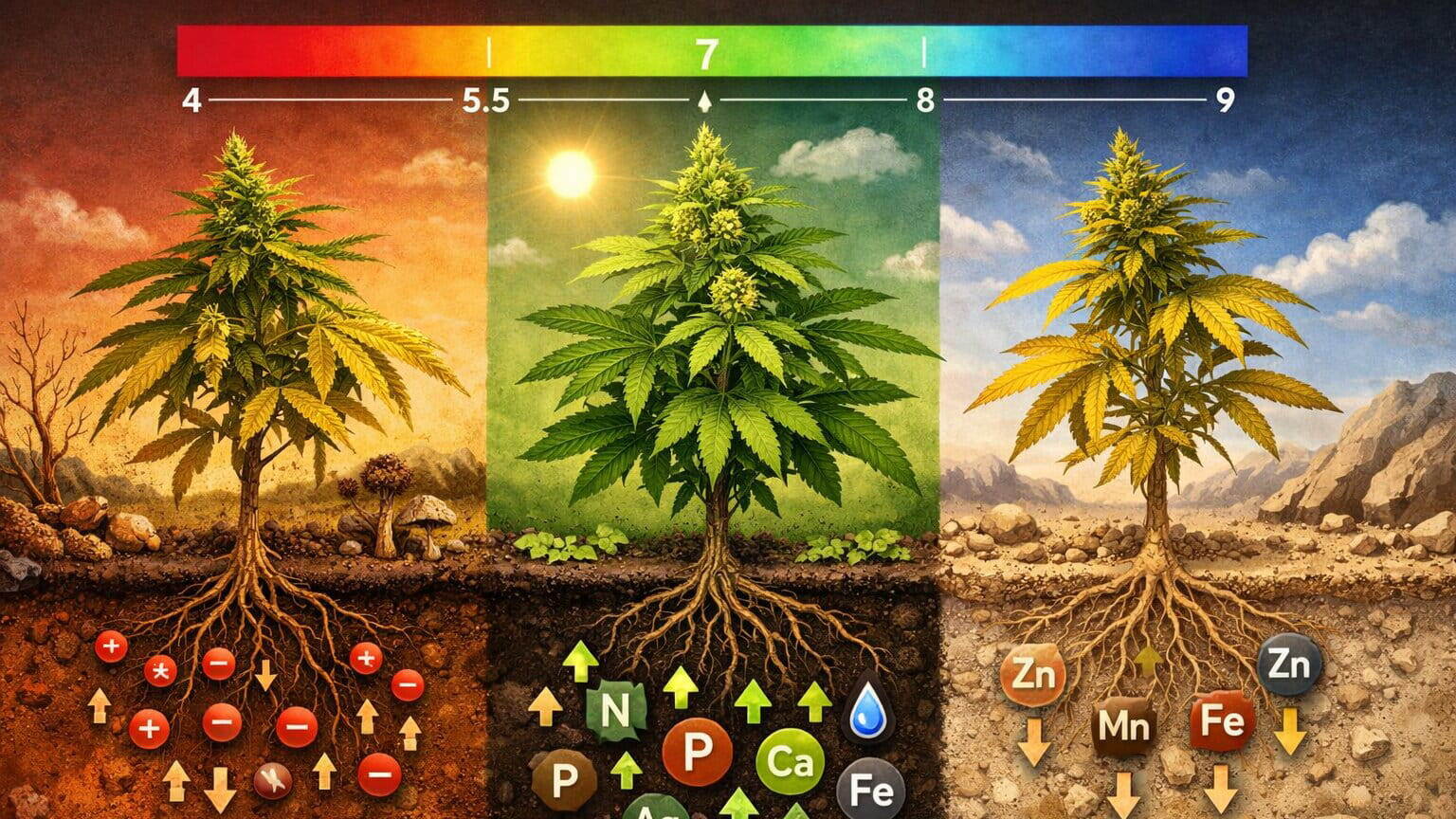
The pH of cannabis is a fundamental indicator that directly affects the plant's ability to absorb essential elements. Optimal soil pH for cannabis creates conditions in which the root system interacts most effectively with the substrate, ensuring stable nutrient uptake by cannabis.
When the pH falls outside the optimal range, problems arise with cannabis pH: nutrients remain in the soil but become unavailable to the roots. As a result, the plant experiences cannabis deficiencies due to pH, which affects its growth and yield.
To maintain the right balance, experienced growers use micro-dosing of fertilizers — a method of applying nutrients in small portions, which avoids sharp spikes in acidity and maintains the optimal pH of the cannabis soil. This approach helps prevent the blocking of cannabis nutrients and ensures uniform nutrition at all stages of development.
Blockages and nutrient deficiencies
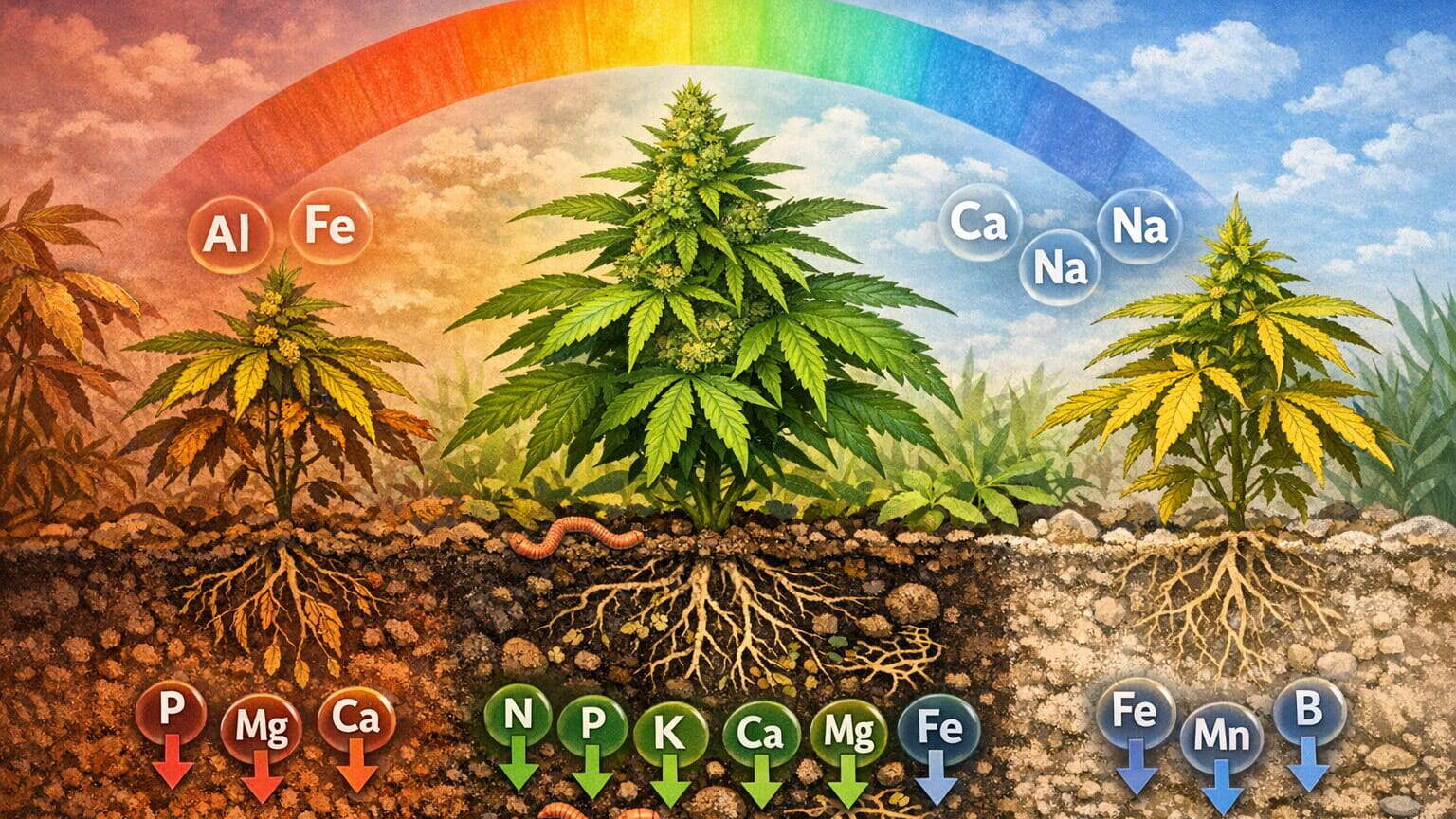
When the pH of cannabis soil falls outside the optimal range, the plant faces serious problems. Even with sufficient fertilizer in the substrate, cannabis nutrients can become blocked and the roots will be unable to absorb them. This leads to pH-related deficiencies in cannabis, which manifest themselves in slowed growth, discoloration of the leaves, and reduced yields.
To better understand the mechanism, let's look at the main situations:
Acidic environment (pH below 5.5)
- The absorption of calcium, magnesium, and phosphorus is blocked.
- Leaves begin to turn yellow, and signs of chlorosis appear.
- Cannabis nutrient uptake becomes unstable, causing plant stress.
Alkaline environment (pH above 7.0)
- Iron, manganese, and zinc become unavailable.
- Interveinal spots and pale leaves appear.
- Problems with cannabis pH arise, which are difficult to correct without adjusting the substrate.
Unstable pH fluctuations
- Even short-term spikes can cause cannabis nutrients to be blocked.
- The plant does not have time to adapt, and the absorption of nutrients by cannabis decreases sharply.
- In such conditions, it is especially important to use methods to adjust the pH of the cannabis soil.
Impact on aroma and taste
- Nutrient deficiencies due to pH affect not only growth but also the final yield.
- The role of terpenes in aroma and taste is directly related to proper nutrition: if the pH is disturbed, terpene synthesis decreases, and cannabis loses its rich taste and smell.
Thus, the blocking of nutrients in cannabis is not just a technical problem, but a factor that affects the health of the plant, its yield, and quality.
Adjusting and maintaining optimal pH
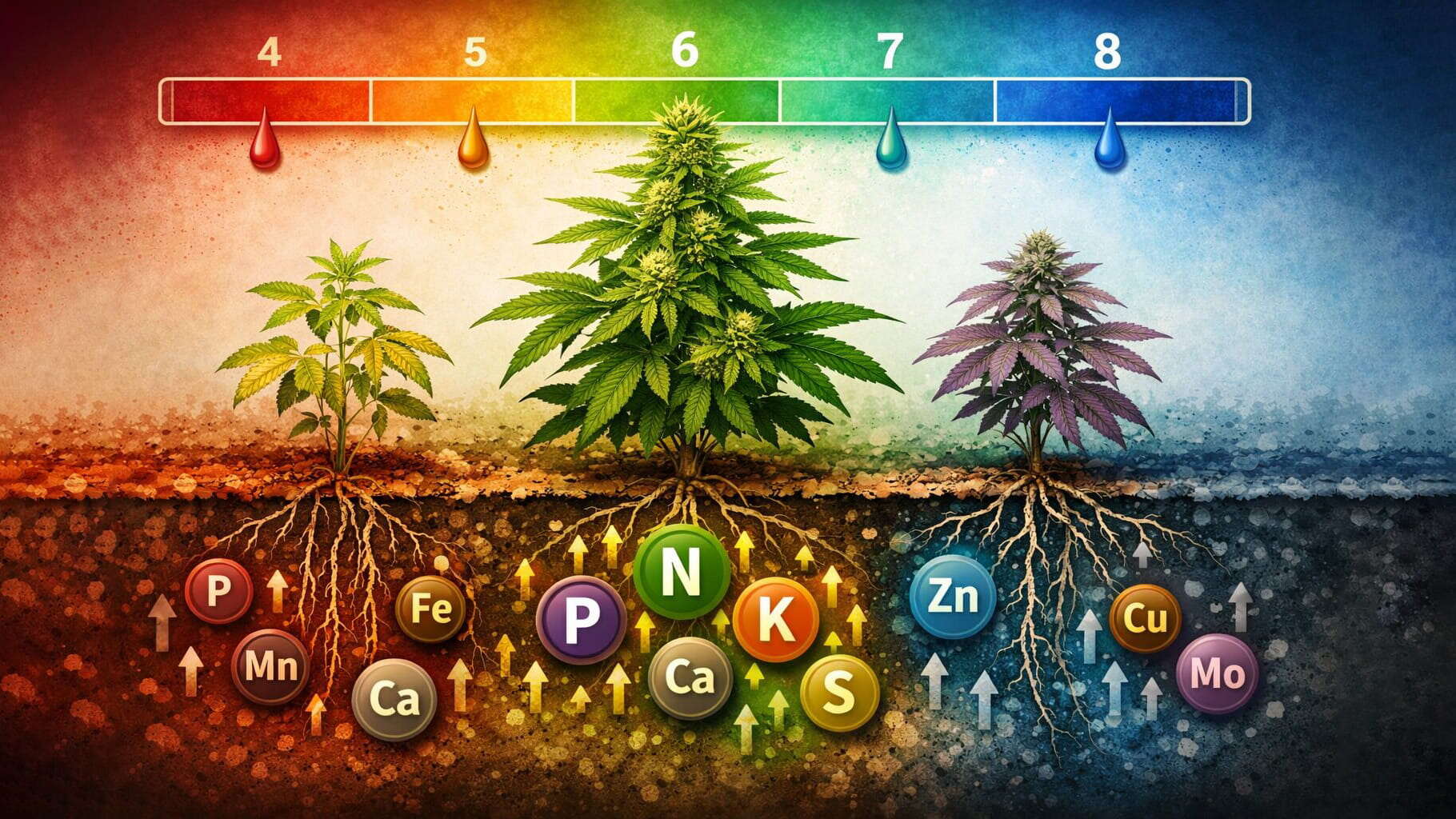
For cannabis to develop fully, it is important not only to monitor the pH of the soil, but also to adjust it in a timely manner. The optimal pH for cannabis is between 6.0 and 6.5 for soil and between 5.5 and 6.0 for hydroponic systems. Maintaining these values prevents the blockage of nutrients and ensures stable nutrient absorption.
Regular adjustment of cannabis soil pH is carried out using special solutions or additives that reduce or increase acidity. This approach helps prevent cannabis pH problems and minimizes cannabis deficiencies due to pH.
It is important to understand that the right balance of nutrients affects not only growth and yield, but also the quality of the final harvest. This is where the connection with plant genetics comes into play: which genes are responsible for THC levels and aroma directly depend on how consistently the plant receives nutrients. If the pH is disturbed, the synthesis of terpenes and cannabinoids may be weakened, which affects the taste, smell, and potency.
Thus, competent pH management is not just a technical process, but a strategic tool that affects the plant's biochemistry and the final quality of the harvest.
This text is for informational purposes only and does not contain instructions for cultivation. Any actions involving plants of the Cannabis genus must comply with the laws of your country/region.
2026-03-09 16:24:23
Views:94