

0.00€
CheckoutHow cannabinoids are formed inside the plant
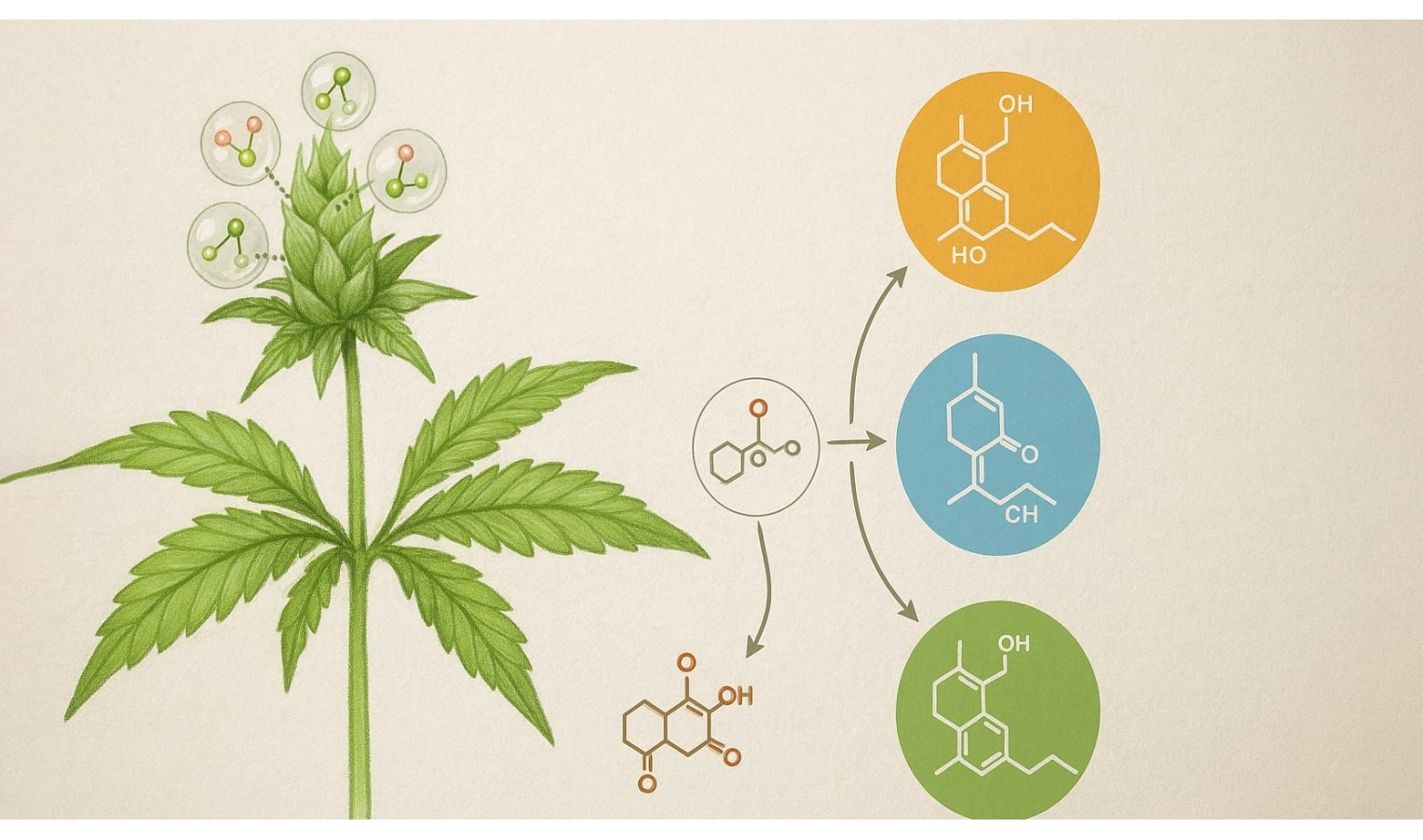
Cannabinoids are unique natural compounds formed inside the cannabis plant that determine its properties. Understanding how cannabinoids are biosynthesised helps explain the differences between strains, their THC and CBD content, and the role of trichomes and terpenes in creating unique aromas and effects.
Biosynthesis of cannabinoids in cannabis
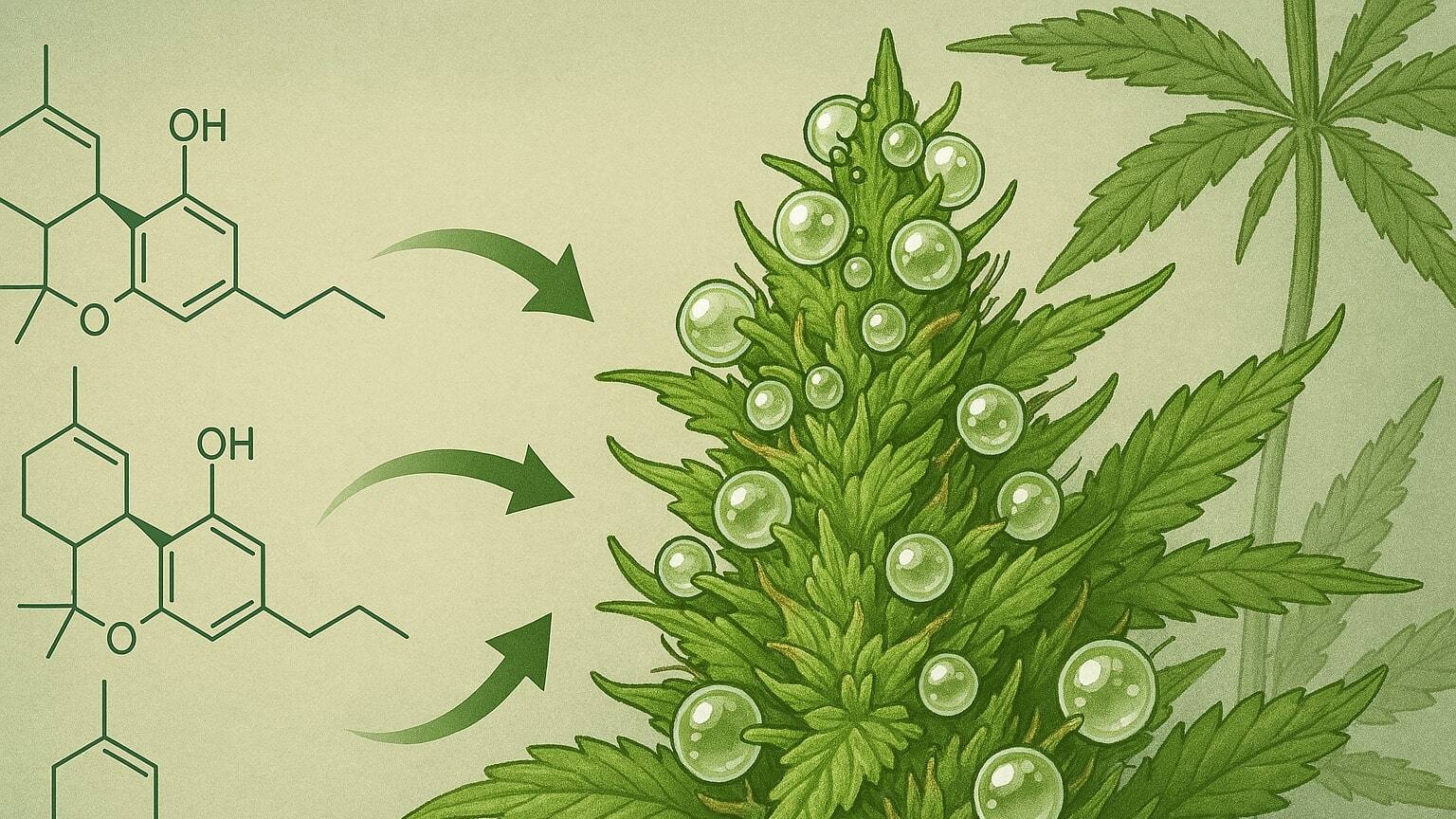
The process of cannabinoid formation within the cannabis plant begins with biochemical reactions that combine organic acids and enzymes into a single chain. This mechanism is called cannabinoid biosynthesis. As a result, key phytocannabinoids such as THC and CBD are formed.
The main ‘factory’ for the production of these compounds is the trichomes of cannabis, microscopic glandular structures on the surface of flowers and leaves. This is where the process of cannabinoid formation begins, and this is where the active substances accumulate.
An interesting question that growers often ask is: Why do some strains have 30%+ THC, while others do not? The answer lies in the plant's genetics and the characteristics of its biosynthetic pathways. In some strains, enzymes more actively convert precursors into THC, while in others, they convert them into CBD or other natural cannabinoids. In addition, growing conditions such as light, temperature, nutrition, and even stress factors influence the result.
Thus, biosynthesis is not just chemistry, but a complex combination of genetics and environment that determines the final THC and CBD content in a particular strain..
The role of trichomes and cannabinoid formation
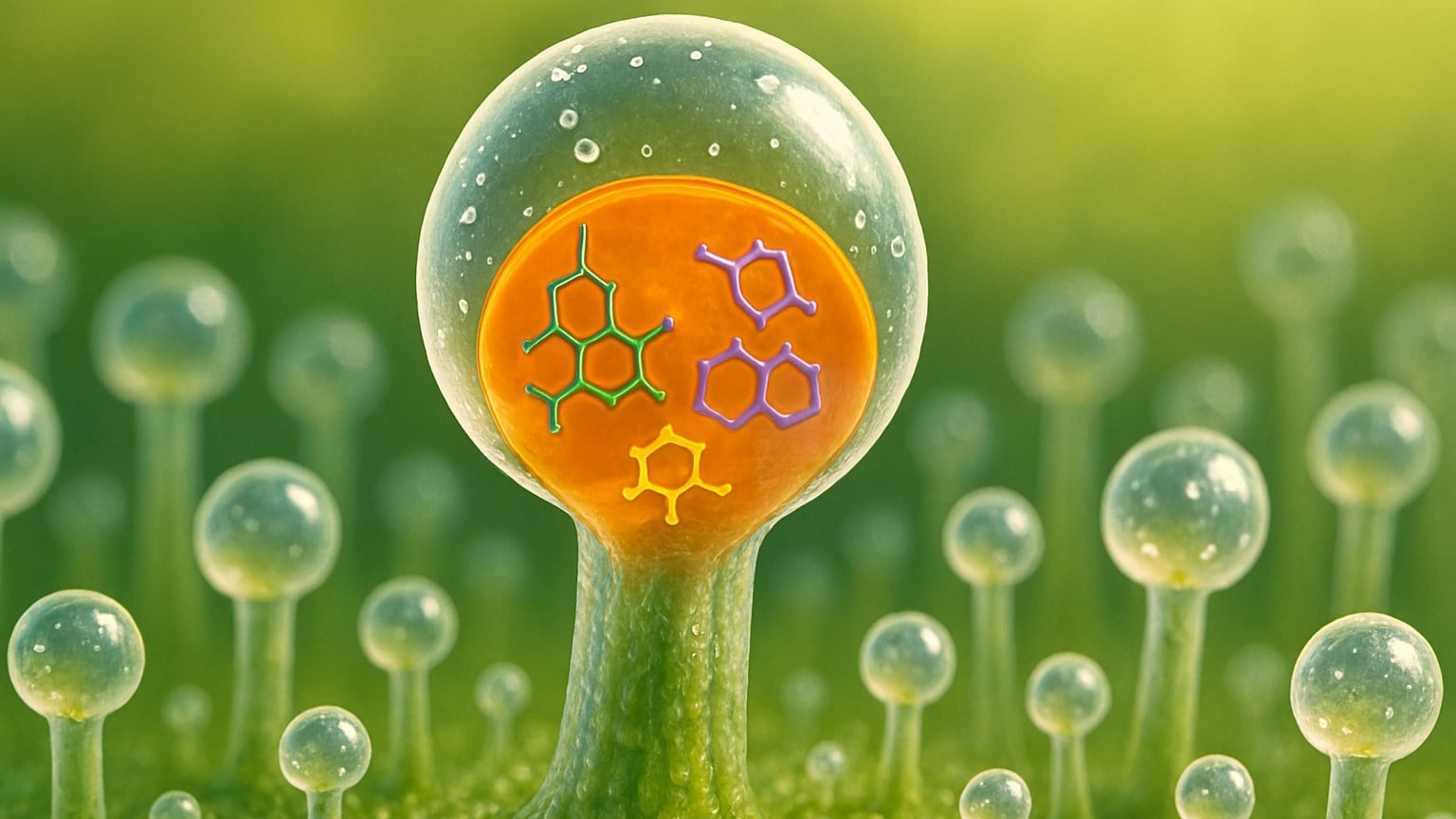
The formation of cannabinoids in the cannabis plant occurs in special microscopic structures called cannabis trichomes. These glandular cells act as mini-laboratories where biosynthesis is initiated and phytocannabinoids gradually accumulate.
To understand exactly how trichomes affect the final THC and CBD content, we can identify several key stages:
- Synthesis of precursors
Inside the trichomes, enzymes combine organic acids to form basic molecules, which are then converted into cannabinoids. - Formation of cannabinoids
At this stage, differentiation occurs: some of the compounds are converted into THC, some into CBD, and others into other natural cannabinoids. - Accumulation and protection
Trichomes secrete resinous substances that not only store cannabinoids but also protect the plant from external factors such as ultraviolet light, insects, and temperature fluctuations. - The influence of terpenes
In addition to cannabinoids, trichomes synthesise aromatic compounds called terpene molecules. This is where terpenes play a role in the aroma and taste of cannabis: they form the unique profile of a strain, determining its smell and flavour.
Thus, trichomes are not just ‘reservoirs’ of cannabinoids, but complex biochemical centres where the final THC and CBD content, as well as the individual organoleptic properties of the plant, are determined..
Natural cannabinoids and their significance
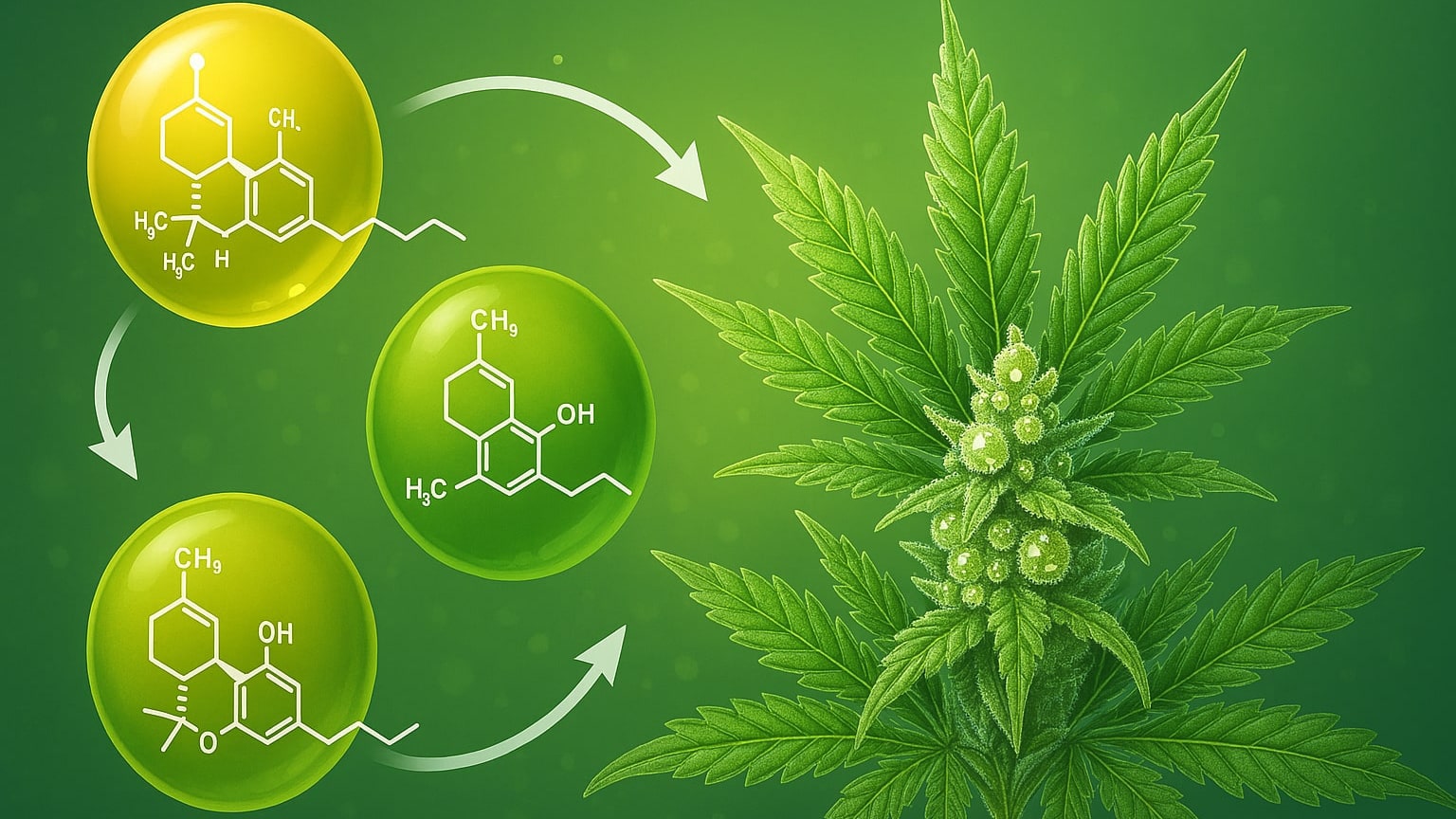
Phytocannabinoids, which are produced in the cannabis plant, are a unique class of compounds. Among them, THC and CBD are key, but there are also many secondary molecules that influence the effect and therapeutic potential.
The main question for breeders and farmers is: when is the ideal time to harvest? It is the moment of harvest that determines the balance between THC and CBD content, as well as the saturation of terpenes, which are responsible for aroma and taste.
| Cannabinoid | Main action | Effect on plants | Optimal content during harvest |
| THC | Psychoactive effect, euphoria | Protection from ultraviolet rays and pests | 15–30% depending on the variety |
| CBD | Therapeutic potential, relaxation | Balance of biochemical processes | 5–15% for medical varieties |
| Minor cannabinoids (CBG, CBC, etc.) | Modulation of THC and CBD effects | Additional protection and stability | 1–5% |
Thus, understanding the processes of cannabinoid biosynthesis and correctly determining the harvest time allow for maximum quality to be achieved.
This text is for informational purposes only and does not contain instructions for cultivation. Any actions involving plants of the Cannabis genus must comply with the laws of your country/region.
2025-12-29 15:11:29
Views:216