
0.00€
CheckoutCannabis Cultivation: Growing Cannabis Plants Using Seaweed
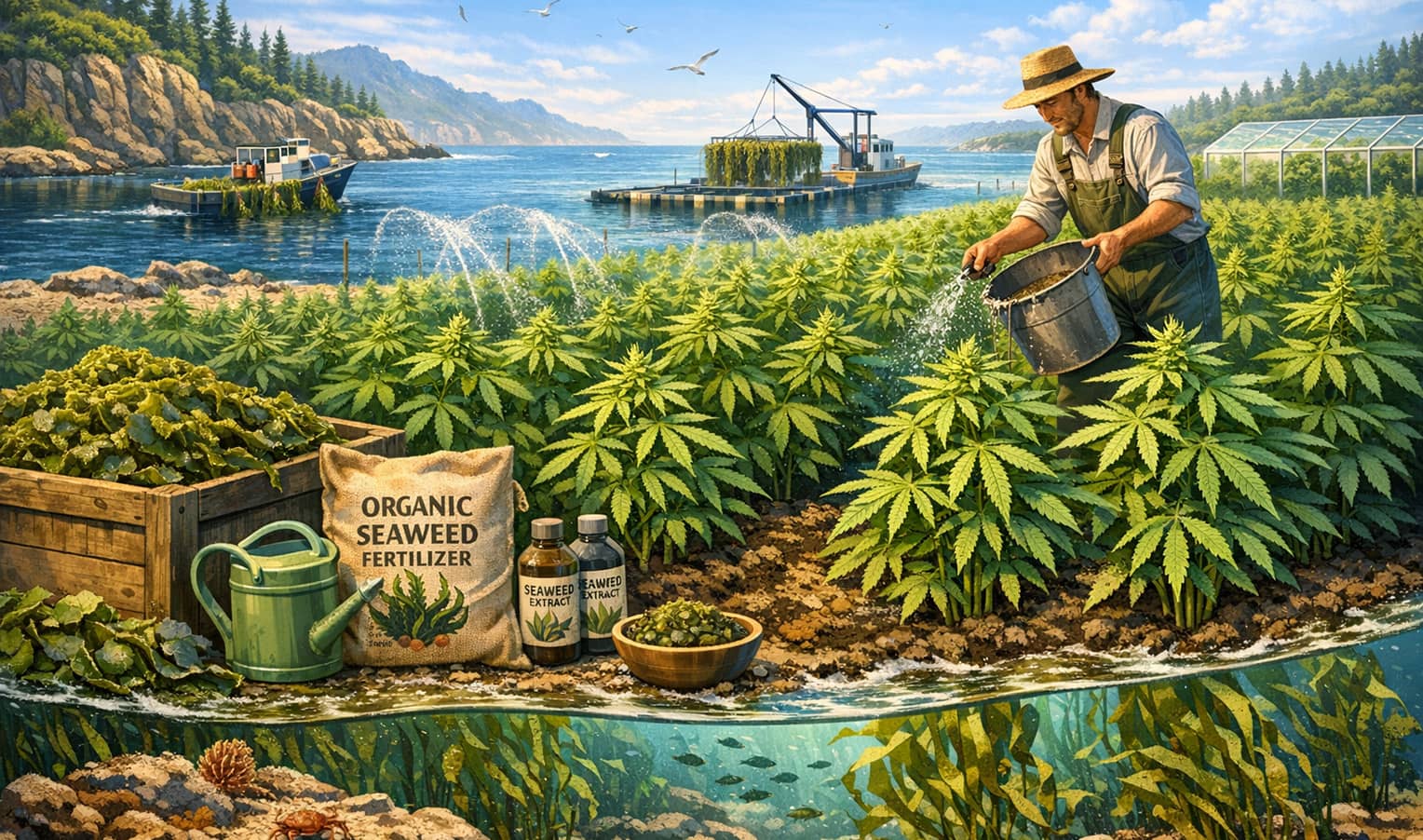
You can grow cannabis successfully if you know how to properly fertilize the soil. The use of seaweed has become one of the best‑kept secrets among high‑quality growers. Seaweed is known for its ability to stimulate growth and help plants cope with stress, making it a popular method among many cultivators. Below, we’ll explore the full potential of this marine resource in order to achieve a truly powerful yield.
Seaweed and Cannabis
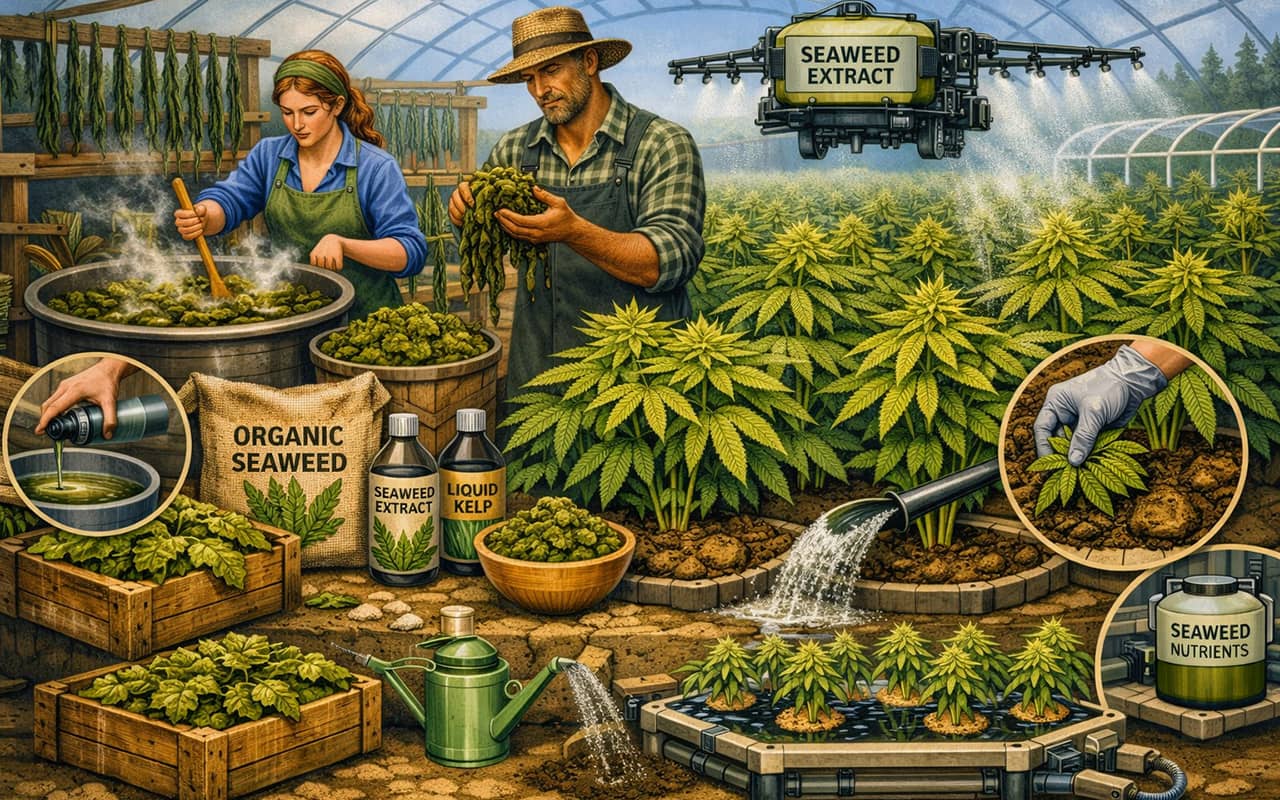
Seaweed is rich in nutrients, containing more than 60 minerals and trace elements such as iron, manganese, zinc, and molybdenum, as well as natural plant hormones — auxins, cytokinins, and gibberellins. Together, these compounds play a key role in supporting the growth and development of cannabis. Many growers seeking organic biostimulants to improve plant health use seaweed as one of the most proven and reliable components.
Seaweed fits perfectly within the principles of organic cannabis cultivation. It enriches the soil and supports microbiological activity, leaving minimal residues when applied correctly.
Using Seaweed in Cannabis Cultivation
The advantages of using seaweed extracts offer a wide range of benefits for cannabis cultivation, such as:
- Stimulating root development: Natural hormones found in seaweed (especially auxins and cytokinins) promote more active and healthy root growth, improving water and nutrient uptake and supporting faster overall development.
- Increased stress resistance: Seaweed helps cannabis plants better withstand unfavorable conditions such as drought, heat, cold, or pests due to its osmoprotective and antioxidant compounds that strengthen the plant’s natural defense mechanisms.
- Better nutrient absorption: Seaweed promotes symbiosis between roots and beneficial microorganisms like mycorrhiza and soil bacteria, enhancing the plant’s ability to absorb nutrients. It also supplies the plant with trace elements and compounds that may be lacking in the substrate, such as mannitol or alginates, improving nutrient availability.
- Enhanced aroma and flavor: Adding seaweed can strengthen the aromatic profile of buds, as improved plant health stimulates terpene and flavonoid production.
When Seaweed Is Needed for Growing
Since cannabis has specific physiological requirements at each stage of its growth, seaweed‑based products work best when applied at stages where the plant can use them most effectively.
During Rooting: Germination and Seedlings
At the earliest stages of plant life, seaweed is especially valuable. Even a small dose provides natural auxins that accelerate root formation in clones and stimulate seed root growth.
Vegetative Growth
During the vegetative phase, seaweed supports lush foliage growth and increases plant resilience. The cytokinins it contains stimulate rapid cell division and the formation of new shoots, while micronutrients ensure a rich green color and reduce the risk of nutrient deficiencies.
Early Flowering Phase
The first 2–3 weeks of flowering are critical, as the plant redirects its energy toward bud formation and often experiences noticeable physiological stress. Using seaweed at this stage helps ease the transition and stabilize growth — before and at the onset of flowering — helping reduce stress and stimulate additional pre‑flower formation thanks to the cytokinins it contains.
| Growth stage | When to apply algae | Application method | Effect |
| Germination | Not required | — | Seeds do not yet need fertilization |
| Seedlings (Seedling) | 5–7 days after germination | Weak extract solution | Stimulates root development and resilience |
| Vegetative growth | Regularly, 1–2 times a week | Spraying or watering | Accelerates growth, strengthens stems and leaves |
| Blooming (beginning) | First 2 weeks of flowering | Watering or spraying | Supports the transition to flowering, reduces stress |
| Flowering (later) | As needed | Only if signs of deficiency appear | Supports immunity, but does not stimulate flowering |
| Pre-harvest and harvest | Do not use | — | Algae may affect taste and aroma |
| Pruning and drying | Do not use | — | No fertilization required |
Precautions When Using Seaweed
Although seaweed has great benefits, experienced cannabis growers know that excessive use can negatively affect the plant. There are key moments — especially as the growth cycle nears completion — when it’s wiser to refrain from using these biostimulants.
Late Flowering Phase
When the plant enters the final flowering stage, it directs all its energy toward ripening the buds. Adding growth stimulants at this point can have the opposite effect, so many growers recommend stopping their use around the third or fourth week of flowering.
Accidental Overdose
A common mistake is thinking “if a little is good, more must be better.” Seaweed extracts are highly effective in small doses, while overuse can oversaturate the medium or upset nutrient balance. Despite their typically low NPK content, excessive use can still alter substrate pH or cause micronutrient overfertilization. It’s best to stick to the recommended doses and observe the plant’s reaction.
Unnecessary Mixing and Duplication
Another common mistake is combining similar products “just in case.” Each manufacturer formulates their stimulators differently, and mixing two similar soil additives can disrupt growing parameters, cause hormonal overload, or destabilize pH. Always check manufacturer recommendations for product compatibility.
Conclusion
There are many seaweed-based products on the market designed to aid in cannabis seed cultivation, so it’s only natural that growers wonder which one is best. Ultimately, the best choice depends on the specific needs of your grow.
It all comes down to adapting seaweed use to your cultivation conditions, choosing a reliable product, and paying attention to results. Your plants will quickly show you whether the extract is working — and usually, it does.
The main thing is to enjoy the process. Organic cultivation with seaweed not only improves yield but also connects you to a more natural way of caring for your plants. Over time, you’ll begin to notice subtle signs, understand their needs, and give them the best that nature has to offer.
2026-03-30 13:23:23
Views:18